

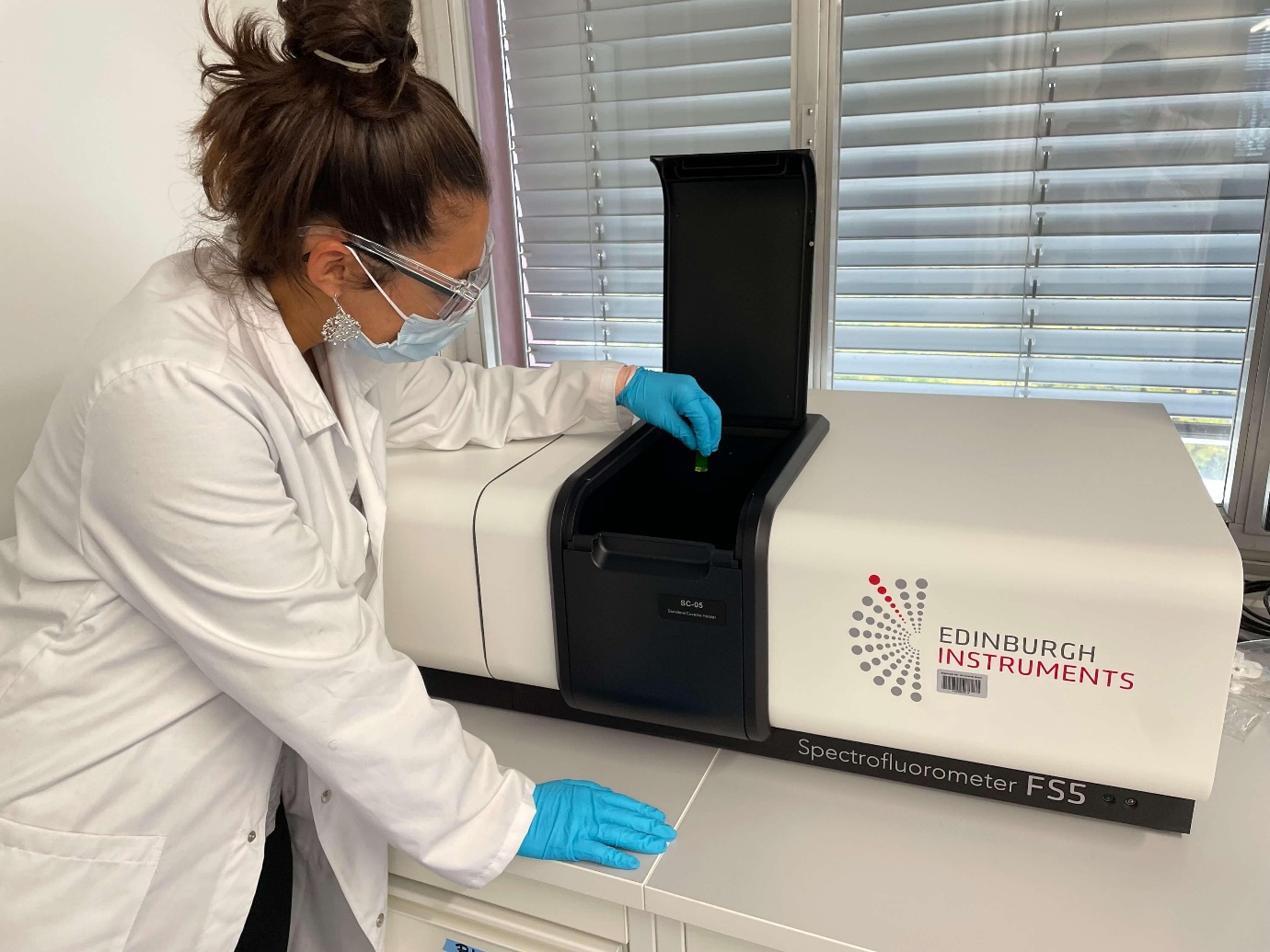
A researcher examines a fluorescence assay and notices that two experimental groups display nearly identical signals. The result initially suggests that both groups behaved similarly. However, the instrument may be detecting light from multiple sources that its measurement settings cannot adequately distinguish. Scientists investigating where to buy DSIP lab peptides should consider how analytical specificity affects their planned experiments. Fluorescence measurements can provide valuable information, but overlapping signals may create misleading observations when researchers overlook the limitations of their detection methods.
Understanding How Fluorescence Measurements Work
Fluorescence occurs when certain substances absorb light and subsequently emit light at different wavelengths. Laboratory instruments detect that emission to investigate properties relevant to an experiment. However, the measured signal depends on the fluorescent substance, optical settings, surrounding sample components, and instrument characteristics. A bright response does not automatically identify its source. Researchers should understand what their method is designed to detect and which alternative sources could contribute. This foundation helps prevent attractive fluorescence images or numerical readings from becoming unsupported scientific conclusions.
Recognizing Overlapping Fluorescent Emission Signals
Different fluorescent substances may emit light across partially overlapping wavelength ranges. When an instrument cannot adequately distinguish those contributions, the resulting measurement may combine signals from more than one source. This phenomenon can complicate experiments involving multiple fluorescent markers. Researchers should examine relevant spectral characteristics and validated method information before assigning a signal to a particular component. Overlap does not automatically make an assay unusable. Its importance depends on the research question, detection system, and the evidence supporting the analytical approach.
Identifying Background Fluorescence From Samples
Not every fluorescent signal originates from the marker a researcher intended to measure. Certain sample components, laboratory materials, or experimental conditions may contribute background fluorescence. This can become important when expected signals are weak, or differences between groups are small. Appropriate controls can help researchers evaluate possible background contributions, although their suitability depends on the specific assay. Investigators should distinguish observed fluorescence from assumptions about its origin. A clear understanding of background behavior makes unusual results easier to interpret without prematurely identifying a cause.
Selecting Materials Without Assuming Compatibility
When planning experiments involving FOXO4-DRI for sale, researchers should evaluate the proposed material’s scientific purpose independently of the fluorescence method being considered. A product listing cannot establish compatibility with an analytical assay or demonstrate that observed signals are specific. Laboratories need supporting evidence for material identity and separate validation of relevant measurement procedures. If a study introduces additional substances, researchers should assess whether those changes affect interpretation. This approach prevents material availability from determining analytical choices that require independent scientific justification.
Evaluating Instrument Settings and Limitations
Fluorescence instruments use optical components and detection settings that influence which signals reach the measurement system. Different configurations can produce different results from otherwise comparable samples. Researchers should understand the relevant instrument specifications and whether the chosen settings are appropriate for their approved method. Adjusting equipment informally to obtain a stronger signal may introduce new uncertainty. Where measurements appear inconsistent, recorded settings and performance checks provide useful evidence. Reliable interpretation depends on understanding what the instrument detected rather than assuming it captured only the intended fluorescence.
Investigating Unexpected Signals Across Experiments
Suppose a fluorescence signal appears in a comparison group where little response was anticipated. The team might initially suspect an unusual experimental effect. However, background emission, spectral overlap, and technical variation could offer alternative explanations. Researchers should preserve original measurements and examine appropriate controls before identifying a cause. Additional evaluation must follow approved laboratory procedures. If the available evidence cannot distinguish competing explanations, the result should remain qualified. Scientific uncertainty is preferable to presenting an attractive signal as proof of an unsupported mechanism.
Communicating Fluorescence Findings With Precision
Research reports often use colorful fluorescence images and graphs to communicate experimental observations. These visuals can be persuasive, but their meaning depends on how signals were collected and interpreted. Authors should describe relevant detection methods, controls, processing decisions, and limitations. When multiple fluorescent sources may contribute, the report should explain how specificity was evaluated. Readers need enough context to distinguish measured light from conclusions about biological or chemical activity. Clear explanations protect the scientific value of images without relying on visual impact alone.
Conclusion
Colorful fluorescence images can communicate experimental observations powerfully, but their visual appeal should never substitute for analytical specificity. Overlapping emissions may make distinct sources appear connected when the measurement system cannot adequately separate them. Scientists investigating compounds listed by purapeptides.com need to establish what their chosen fluorescence methods can actually distinguish. The value of a fluorescence experiment lies in identifying meaningful signals, not merely producing bright images. Sometimes reducing uncertainty about the source of the light matters more than increasing the intensity of the glow.